Holographic Pointillism
MY EXPERIMENTATION BEGAN AT A YOUNG AGE WITH INVISIBLE INK AND A UV FLASHLIGHT AFTER FINDING AN OLD SECRET DIARY AT A SALVATION ARMY.
I THEN BEGAN TO PLAY WITH NEON HIGHLIGHTERS AND THE UV LIGHT MY DAD HAD IN HIS TOOLBOX...
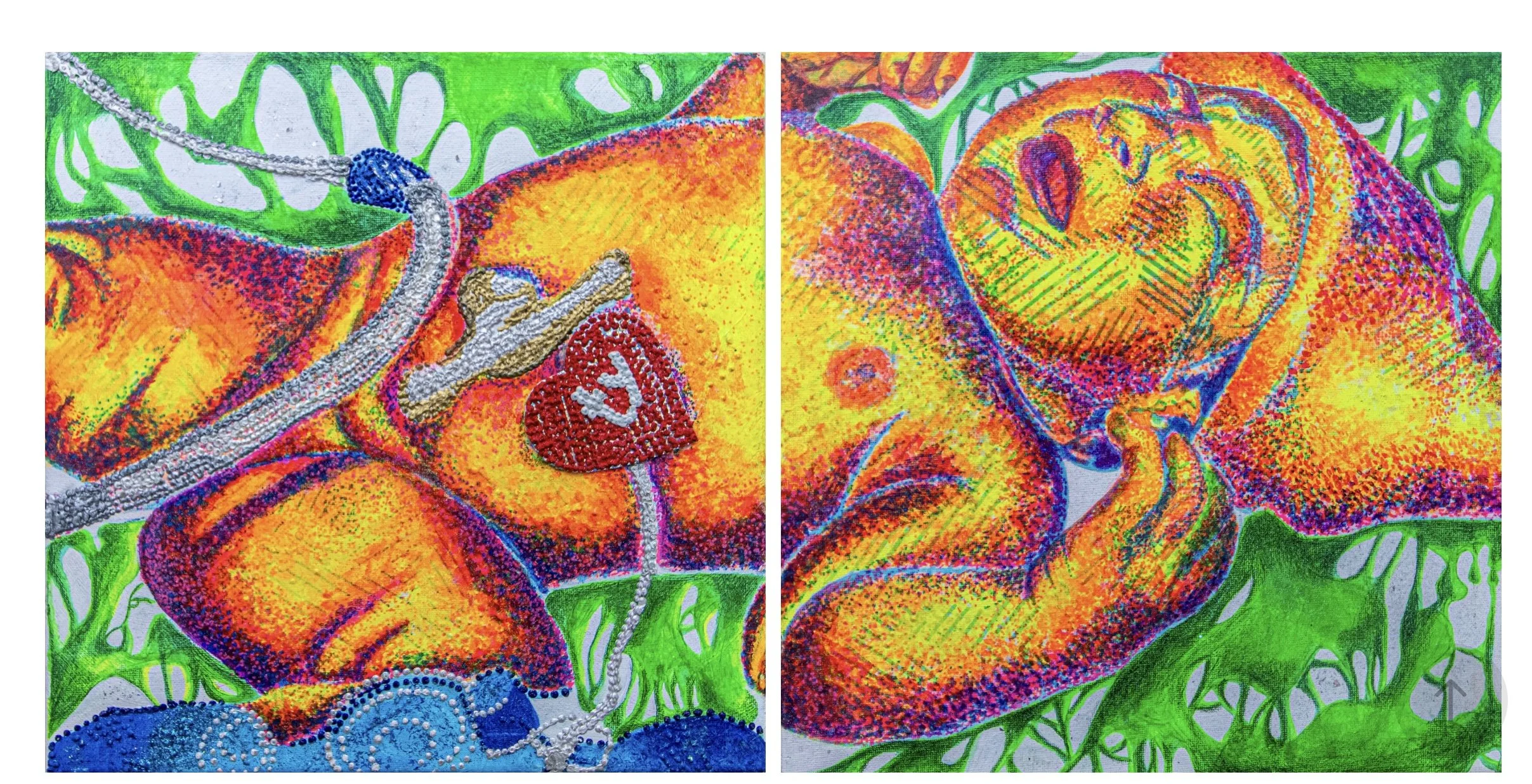
Holographic pointillism, 2023
10” x 20”, Acrylic on canvas
Holographic Pointillism is where holographic elements or effects are incorporated into a pointillist-style artwork.
This might involve using holographic materials or techniques to create a dynamic or three-dimensional aspect to the traditional pointillist approach.
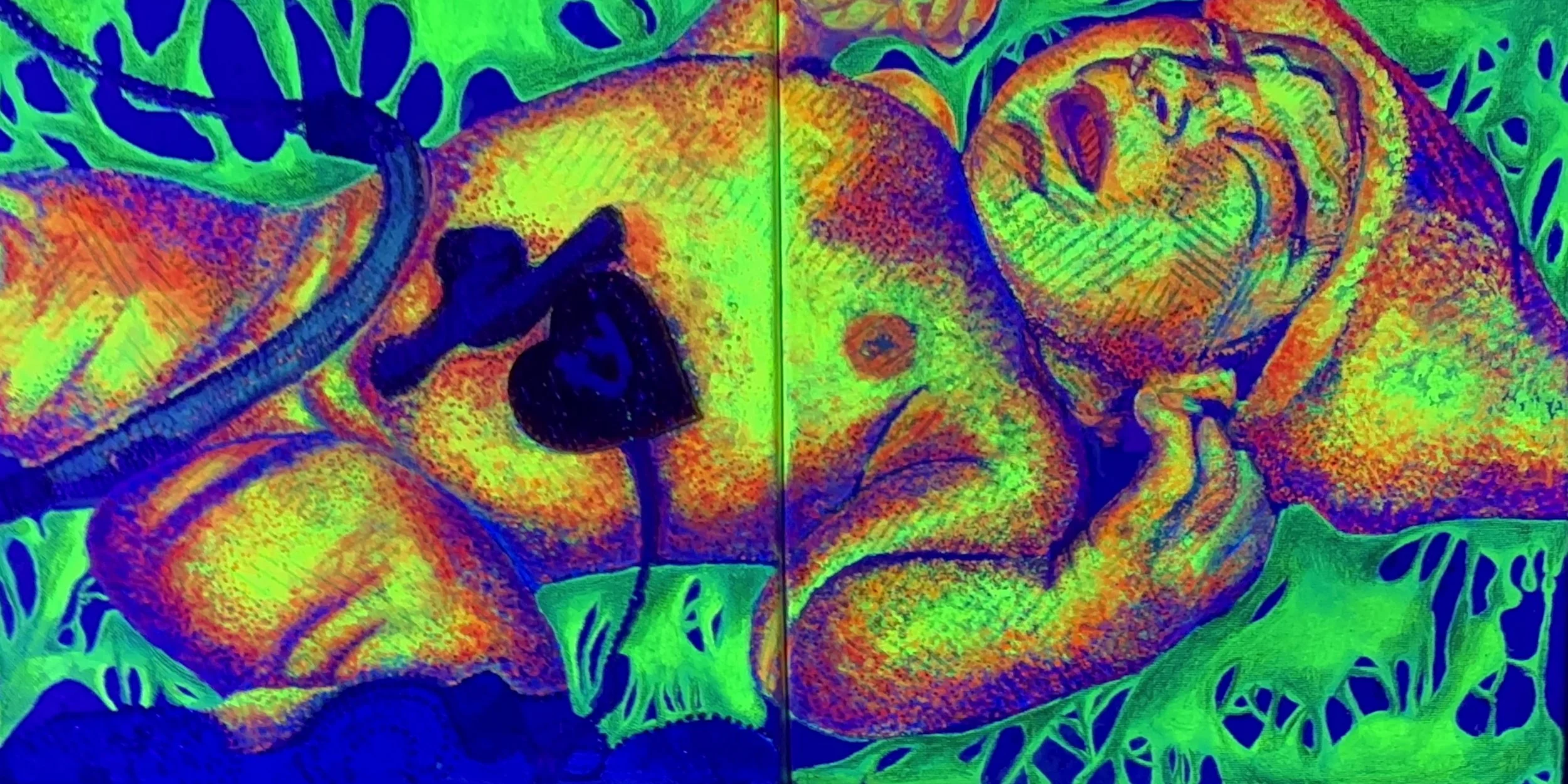
In my Artwork I use UV reactive-neon paint and the whole light spectrum to play with perspective.I create an image using dots and color theory.
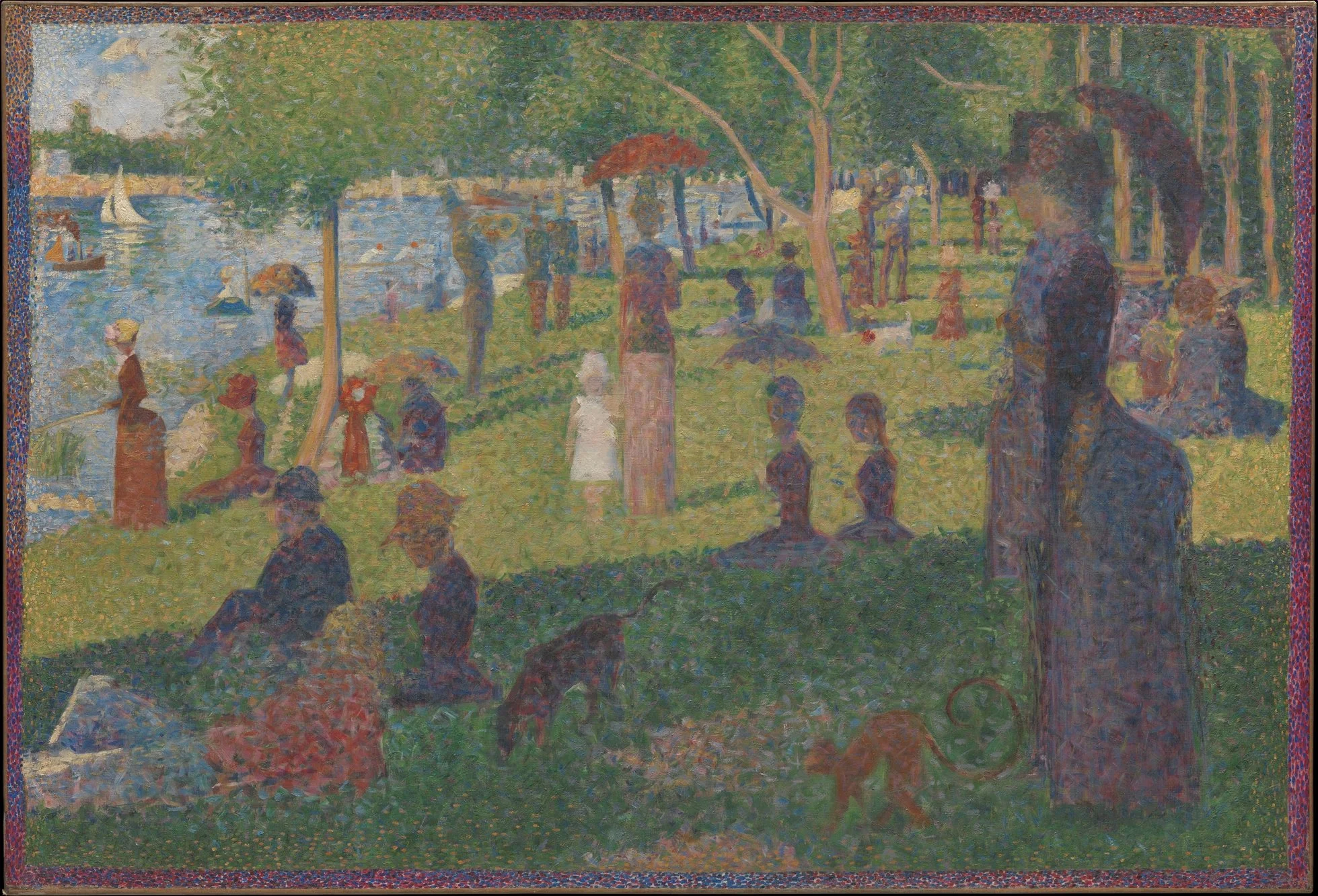
Pointillism is an art technique developed in the 19th century, notably by artists such as Georges Seurat and Paul Signac. It involves creating an image using small, distinct dots of color that, when viewed from a distance, blend together to create a cohesive image. Holography, on the other hand, is a technique that produces a three-dimensional image using the interference pattern of light. Holographic images can appear to have depth and change as the viewer's perspective changes.
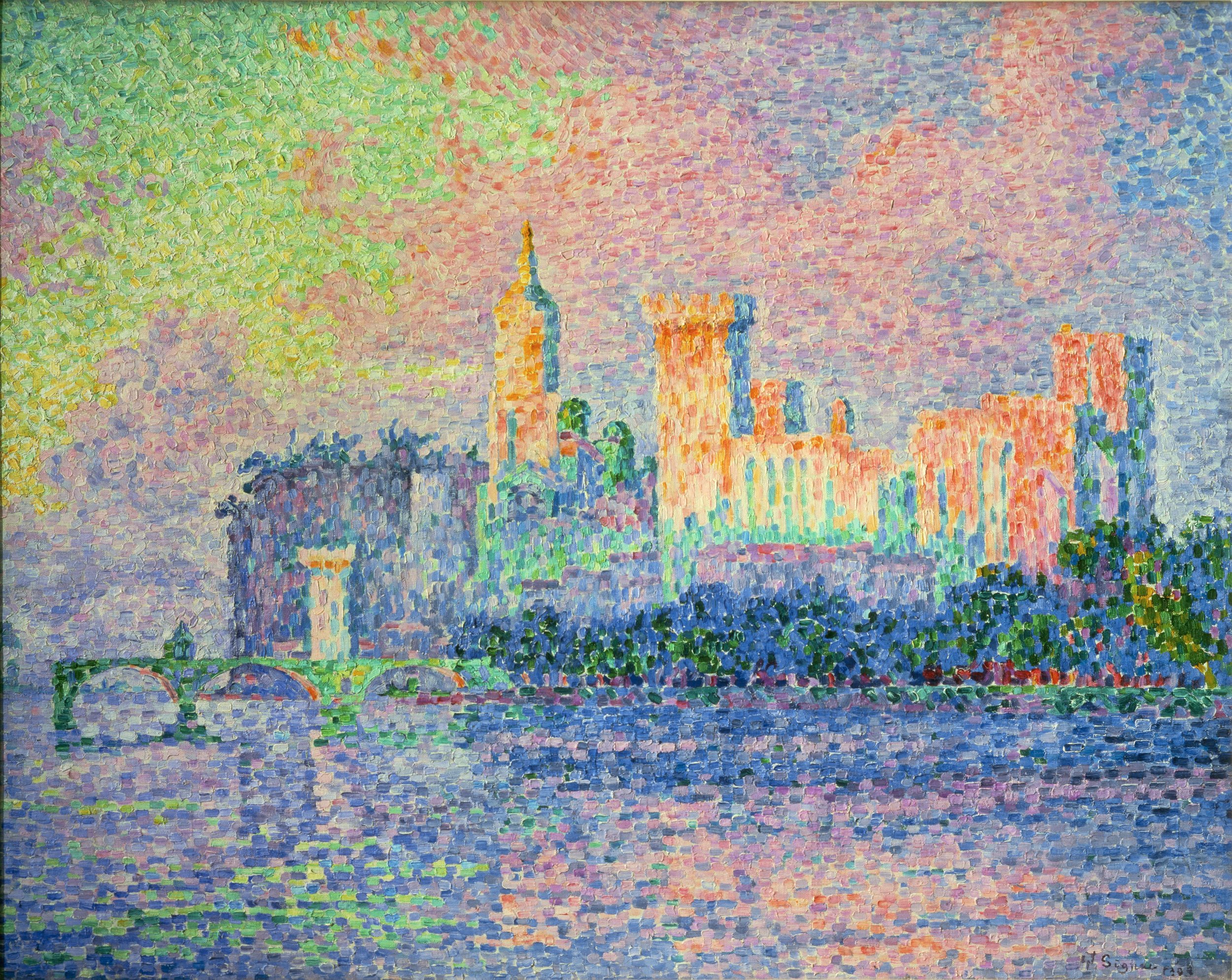
Prominent works in the pointillist style include Seurat's "A Sunday Afternoon on the Island of La Grande Jatte" and Signac's "The Papal Palace, Avignon." Pointillism had a significant impact on the development of modern art, influencing subsequent movements such as Neo-Impressionism and Divisionism. The technique highlights the intersection of art and science, exploring the ways in which the human eye perceives and interprets color.
Key characteristics of pointillism
-
Artists use small, individual dots or strokes of color rather than continuous brushstrokes. These dots are applied in a systematic way, covering the entire canvas.
-
Artists often use pure, unmixed pigments for each dot. By placing complementary colors next to each other, the viewer's eye blends them optically, creating a sense of vibrancy and luminosity.
-
Instead of physically mixing colors on the palette, pointillist painters rely on the viewer's eyes to mix and perceive colors optically from a distance. This creates a unique visual effect and a sense of unity in the artwork.
-
Some pointillist artists were inspired by the scientific understanding of color and light, particularly the work of chemist Michel Eugène Chevreul and his theories on simultaneous contrast.
-
Pointillist paintings often required careful planning and precision, as artists needed to consider the placement and interaction of each individual dot to achieve the desired visual effect.